
Nowadays, many people use optical scopes and know how to adjust the diopter of an optical scope. Optical scopes use the principles of optical imaging to aim at targets. However, many people do not have a clear understanding of which lens groups an optical scope consists of or how these lens groups form images.
Simply put, the optical scopes we use are generally composed of three lens groups. These three lens groups are the basic lens groups, and all are indispensable for image formation. In addition to these three lens groups, some scopes also have other lens groups, depending on the functions and models of the scope.
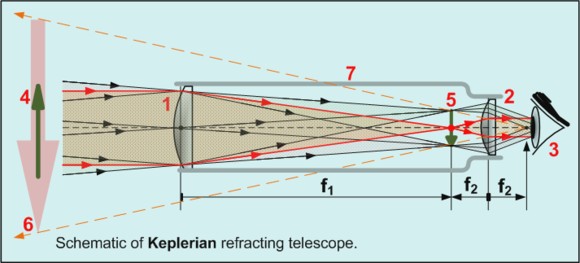
The first is the objective lens group, which is where the target is observed. The objective lens group also needs to collect surrounding light to facilitate aiming. Shooting with a scope is related to light conditions; better lighting generally provides higher shooting accuracy. Therefore, some people choose scopes with larger objective lenses when purchasing one, as they provide better light-gathering performance. However, a larger objective lens does not necessarily mean that aiming will be more accurate, so other factors must also be considered when purchasing a scope.
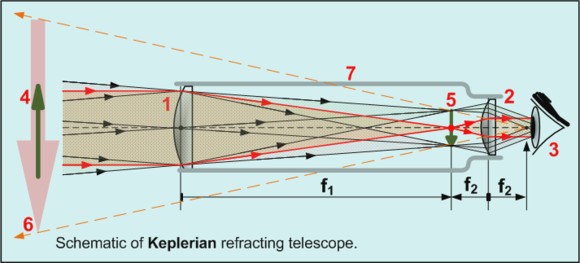
The second is the erector tube assembly. Its name indicates that the primary function of this lens group is image correction. After the objective lens collects light, we can see the target through the eyepiece, and the resulting image is clear and upright. In fact, the image formed by the objective lens is inverted and differs from the image we see. The role of the erector tube assembly in image formation is to correct this inverted image for convenient viewing. The ballistic adjustment and magnification adjustment we commonly refer to are both used to adjust the position of the erector tube assembly. Therefore, the reticle is also installed in the erector assembly and can be located on either the first focal plane or the second focal plane.
The third is the eyepiece group. The eyepiece group is used to observe the image. Its primary function is to convert the light into parallel rays, allowing the eye to observe the widest possible field of view through the tube.